Lathisms
Creative Template
for Webflow
for Webflow

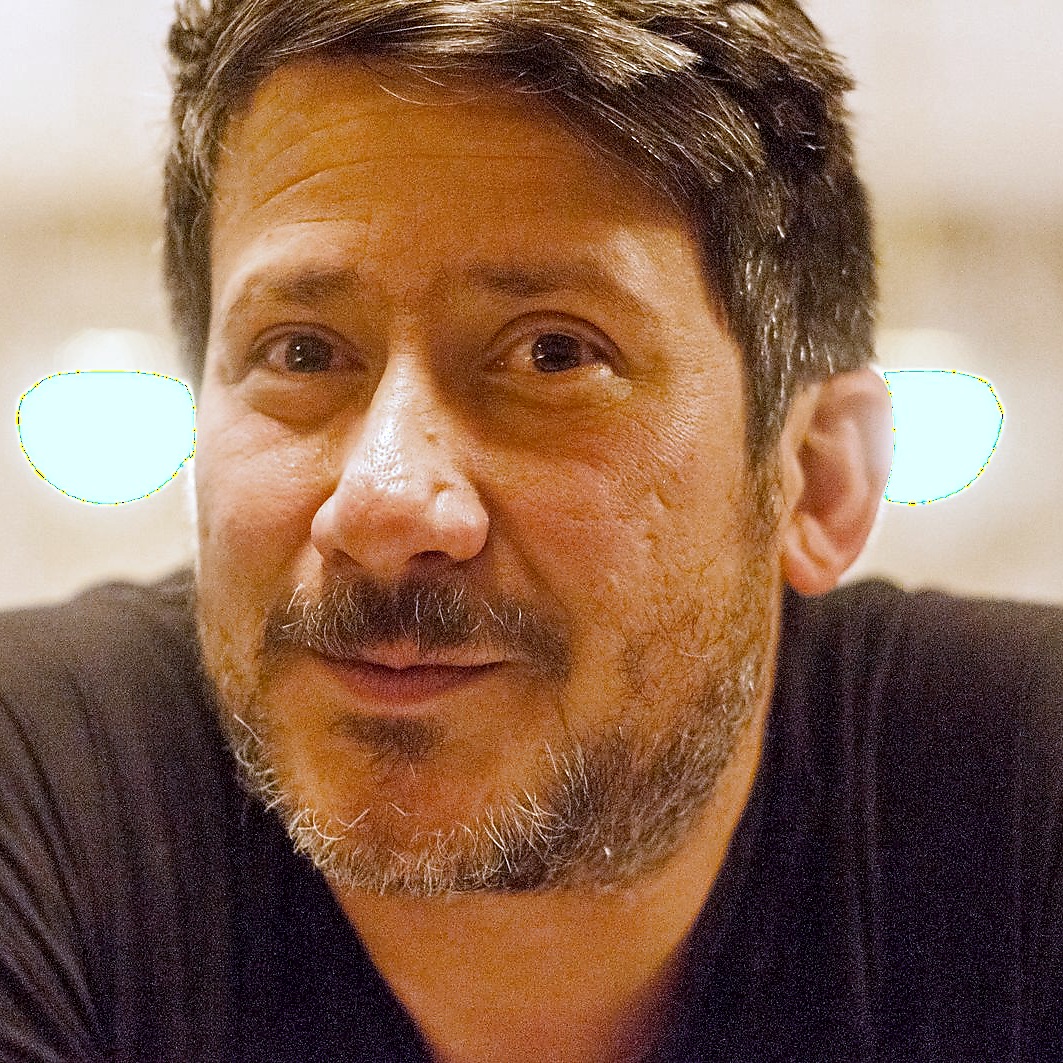
Pedro Poitevin is a Guatemalan-American mathematician, bilingual poet, and Associate Professor of Mathematics at Salem State University. He was born in Freiburg, Germany, and raised in Guatemala City until age seven. After going into exile with his parents, he lived in Berlin, Paris, Tegucigalpa, and San José, Costa Rica, before returning to Guatemala as democracy was being restored. This geographically complex childhood shaped his attention to language, displacement, structure, and the ways people make homes across borders.
Poitevin studied mathematics at Universidad del Valle de Guatemala before earning his Ph.D. in mathematics at the University of Illinois Urbana-Champaign, where he worked under C. Ward Henson. Poitevin's mathematical work sits at the intersection of logic and analysis, especially continuous logic for metric structures, Banach lattice theory, and variable-exponent function spaces. His dissertation and early work studied Nakano spaces, also known as variable-exponent Lebesgue spaces, from a model-theoretic point of view. His dissertation and early work studied Nakano spaces, also known as variable-exponent Lebesgue spaces, from a model-theoretic point of view. More recent work develops explicit axiom systems, graphons as continuous-logic structures, and model-theoretic questions about Banach spaces and asymptotic cones.
At Salem State University, Poitevin has been a devoted teacher and mentor. He has advised students who have gone on to advanced mathematical work, including a former student now pursuing postdoctoral research in Germany and a current student entering a master's program in logic in Barcelona. Poitevin's service to mathematics began early in Guatemala. In 1997, he served as head coach of the first Guatemalan team to participate in the International Mathematical Olympiad, held in Mar del Plata, Argentina.
Poitevin also extends the mathematical sciences into experimental poetry, using combinatorics, symmetry, recursion, and constraint as engines of literary form. His record-setting projects include a combinatorial palindrome consisting of twenty billion Spanish décimas, ten million palindromic sonnets in English, and ten million palindromic sonnets in Spanish. His constraint-based work also includes smaller mathematical-poetic objects, such as true digit-level palindromic equations. For example,
212 · 4⁶³⁵ + 3⁷⁹⁹⁹⁹³ · 9 + 2 · 4⁵ - 1808 = 15 · 4² + 9³⁹⁹⁹⁹⁷ · 3 + 53 · 64²¹² is a true equality whose full string of digits is itself a palindrome and includes every digit from 0 to 9. He has also written the first Spanish-language palindromic sestina, mathematical sonnets published in The Mathematical Intelligencer and the Journal of Humanistic Mathematics, and a planetary-scale found poem built from IATA airport codes, forthcoming in Rattle's Summer 2026 issue. Together, these works show how mathematical structure can generate not only proof and abstraction, but also artistic discovery, memory, play, and public wonder.
“Hispanic Heritage Month reminds me that heritage can be complicated, migratory, and unfinished. For me it means Guatemala, exile, return, Spanish and English, and the long work of making a home in more than one place.”


