Lathisms
Creative Template
for Webflow
for Webflow

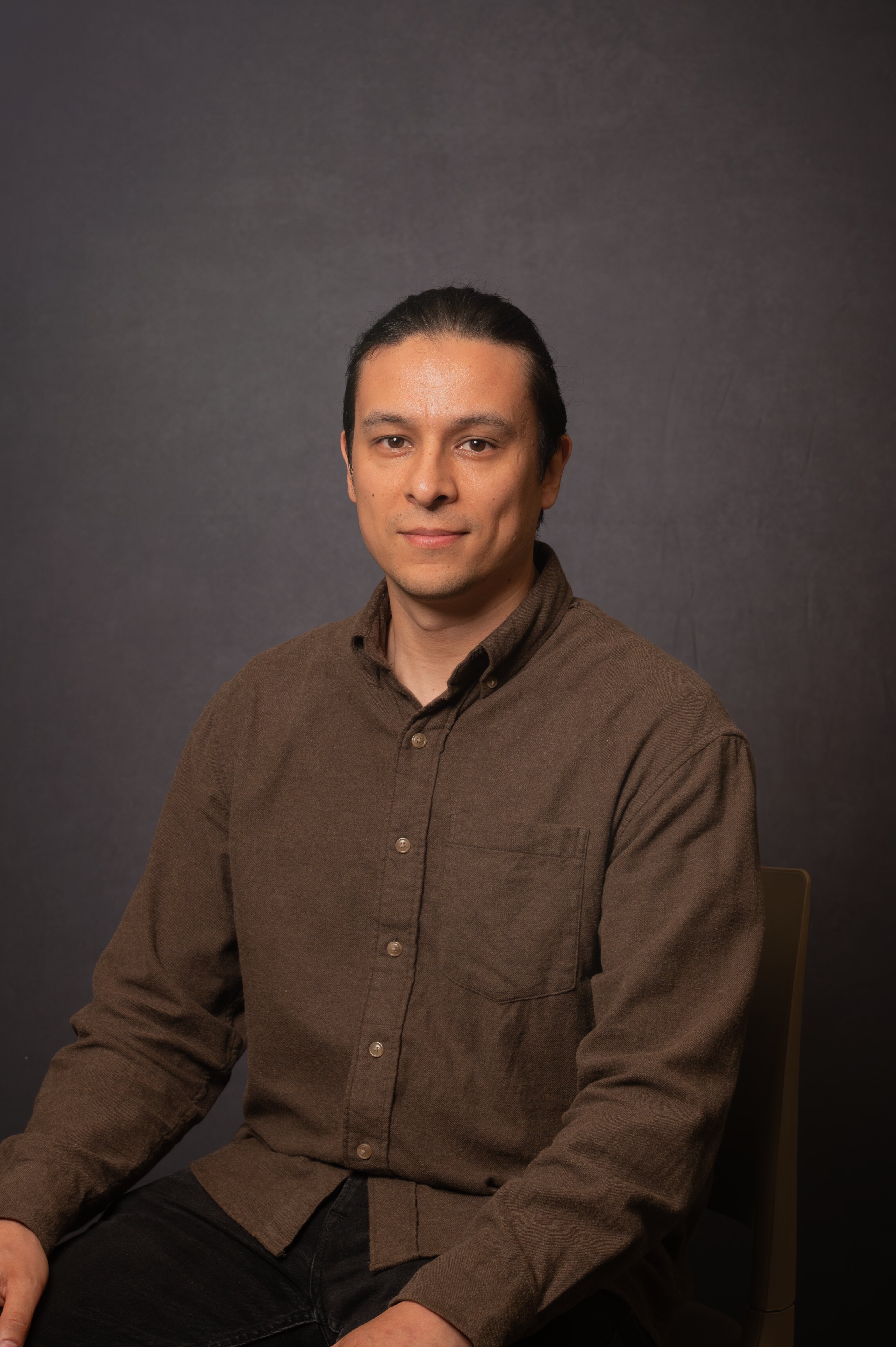
Sergio is a mathematician born in Manizales, in the coffee-growing region of Colombia. Mathematics was never on his radar growing up, and he did not even know that it was a career one could pursue. He initially planned to study engineering, but somehow found himself taking a mathematics course where he encountered the concept of infinity. The idea blew his mind. Curious to explore this new landscape, he moved to Canada to pursue his master’s and PhD studies at the University of Western Ontario.
Sergio is passionate about every aspect of mathematics. As a student, he often wondered whether there was a branch of mathematics that could bring together ideas from many different areas. This curiosity eventually led him to number theory—the study of integers and, more broadly, the properties and structures that arise from numbers.
Dr. Zapata is currently an Assistant Professor at Youngstown State University, where he works in algebraic number theory. He enjoys seeing how different branches of mathematic such as group theory, topology, geometry, linear algebra, and complex analysis, interact with one another and come together to solve problems. Number theory is an especially rich laboratory for seeing these connections in action.
Sergio wants his students to experience mathematics with the same curiosity and excitement that he does. Mathematics is often associated with negative experiences and frustration, and he hopes to help transform those experiences into a more positive and healthy relationship with the subject. Through his teaching, he strives to show students how fun and surprising mathematics can be, using storytelling, puzzles, and counterintuitive results to encourage curiosity and exploration.
Another important part of Sergio's work is expanding access to higher-level mathematics for students from Central and South America. As a student, he remembers how difficult it was to connect with the mathematical research community and to find courses covering topics that were often reserved for specialists. Through mentoring, he hopes to help students from the region gain access to opportunities in number theory, a field that can be particularly difficult to enter even for students who are already studying mathematics.
Sergio has found a wonderful outreach initiative, Pares Ordenados, which pairs students from Central and South America with faculty members or graduate students studying abroad to work together on mathematical reading projects. He has been an active mentor in the program, working with students on reading projects involving specialized topics in number theory. Through these collaborations, he hopes not only to introduce students to advanced mathematics but also to help them see themselves as part of the broader mathematical community.
“Hispanic heritage is a moment to look back and appreciate how special our people are and how hard previous generations have worked to create opportunities and open pathways for us to succeed. It is also a reminder that we now have a responsibility to give back, to keep those pathways open, create new ones, and make sure the next generation has even more opportunities to thrive.”


