Lathisms
Creative Template
for Webflow
for Webflow

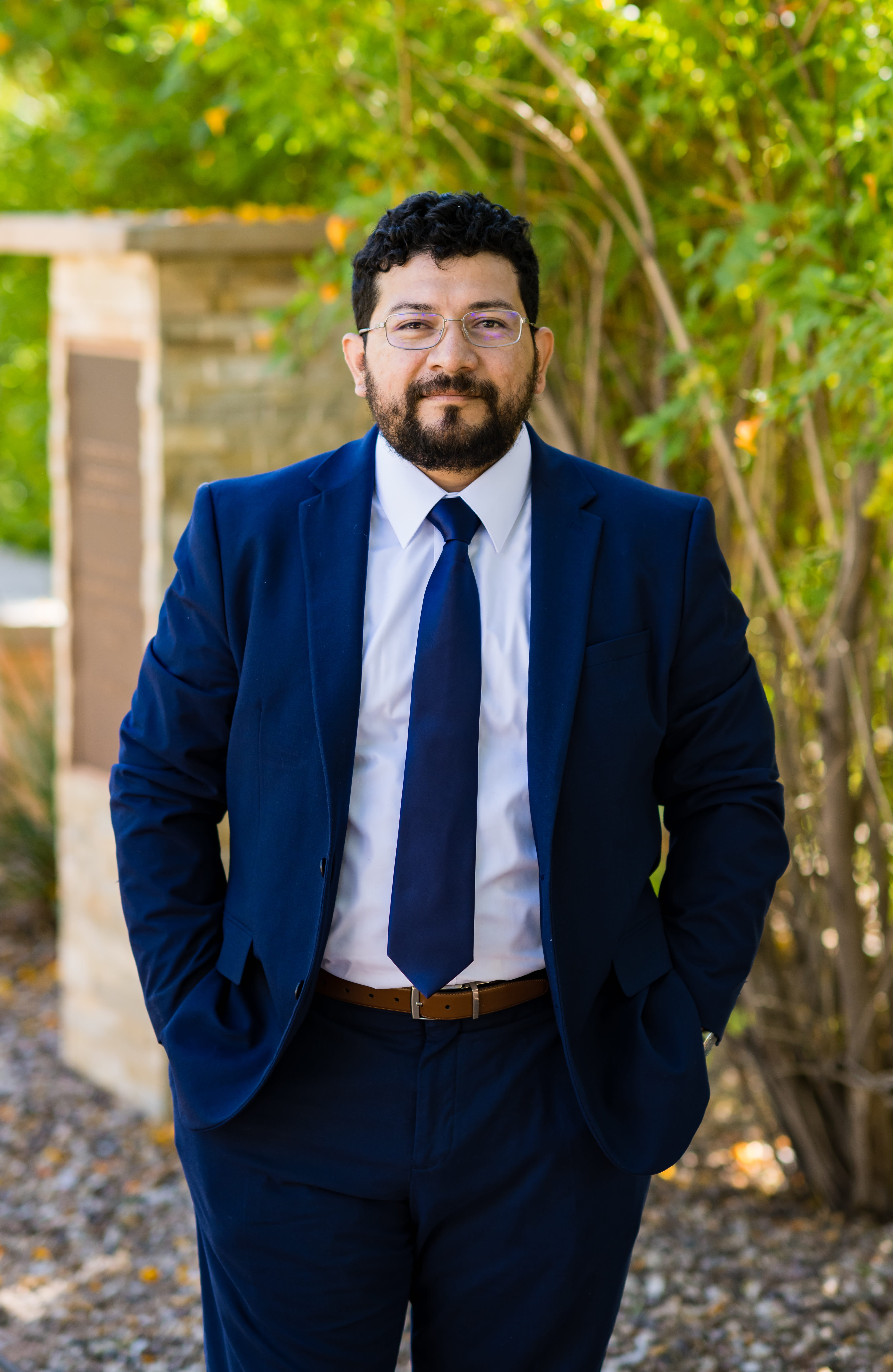
Jordy Cevallos-Chávez is an applied mathematician born in Ecuador whose research lies at the intersection of mathematical biology, epidemiology, and complex adaptive systems. He earned his bachelor's degree in Mathematics from Yachay Tech University, graduating cum laude. Then he pursued both his M.S. and Ph.D. in Applied Mathematics for the Life and Social Sciences at Arizona State University. He also completed a doctoral certificate in Complex Adaptive Systems Science. Jordy is currently a Postdoctoral Research Scholar at Arizona State University, where he studies the interactions between transportation, energy, and environmental systems through mathematical modeling. Throughout his academic career, he has taught undergraduate courses in mathematical modeling, dynamical systems, and applied mathematics, while also mentoring undergraduate researchers, graduate students, and participants in research training programs such as the Mathematical and Theoretical Biology Institute (MTBI-ASU), the Quantitative Research for the Life and Social Sciences (QRLSSP-ASU) and Preparing for Global Challenges (P4GC- University of Virginia). He is passionate about making mathematics accessible and demonstrating how mathematical models can inform solutions to interdisciplinary problems affecting society.
Jordy's work is centered on using mathematics to understand complex biological and social systems. His research combines differential equations, dynamical systems, optimization, data analysis, and computational modeling to study problems in epidemiology, ecology, and complex adaptive systems. His recent work has focused on understanding how human behavior influences the transmission of sexually transmitted viral infections, the spread of COVID-19, and the dynamics of mosquito-borne diseases. More recently, he has expanded his research to study interactions between transportation, energy infrastructure, and environmental quality, illustrating the broad applicability of mathematical modeling to societal challenges. His research has resulted in peer-reviewed publications spanning mathematical biology, applied mathematics, and interdisciplinary science. He values collaborations that connect mathematics with biology, ecology, public health, engineering, and the social sciences, believing that meaningful advances often emerge from interdisciplinary partnerships.
Teaching has been an essential component of Jordy's academic career. At Arizona State University, he has served as instructor for courses introducing students to mathematical modeling, dynamical systems, and applied mathematics. He emphasizes active learning, modeling-based problem solving, and connecting mathematical theory with real-world applications. His goal is to help students view mathematics not simply as a collection of techniques but as a powerful language for understanding complex phenomena.
Mentorship has also played a significant role in Jordy’s professional development. Through programs including the Mathematical and Theoretical Biology Institute (MTBI-ASU), the Quantitative Research for the Life and Social Sciences Program (QRLSSP-ASU), Preparing for Global Challenges (P4GC- University of Virginia) and undergraduate research initiatives, he has mentored students from diverse backgrounds as they develop research skills, explore graduate education, and build confidence in mathematics. Having benefited from supportive mentors throughout his own academic journey, he is committed to creating inclusive learning environments where students feel encouraged to ask questions, collaborate, and pursue ambitious goals. Last year, he taught mathematics at Arizona Jewish Academy to high school students from diverse backgrounds. By fostering an inclusive and engaging learning environment, he helped many of his students make substantial academic progress and develop a deeper appreciation for mathematics.
Beyond research and teaching, Jordy contributes to the mathematical sciences through interdisciplinary collaborations, conference presentations, outreach activities, and service supporting research and education. He believes mathematics has the greatest impact when it is shared broadly and applied to problems that improve society, and he hopes his work continues to strengthen connections between mathematics and the life and social sciences.
“Hispanic Heritage Month reminds me of the community, resilience, and opportunities that have shaped my journey from Ecuador to becoming a mathematician in the United States. It is also a time to honor those who paved the way for others. Mathematicians such as Richard Tapia and Carlos Castillo-Chavez have inspired me through both their scholarship and their commitment to mentoring future generations. I hope my own work in research, teaching, and mentoring encourages young Hispanic students to pursue mathematics and embrace the unique perspectives they bring to our community.”


