Lathisms
Creative Template
for Webflow
for Webflow

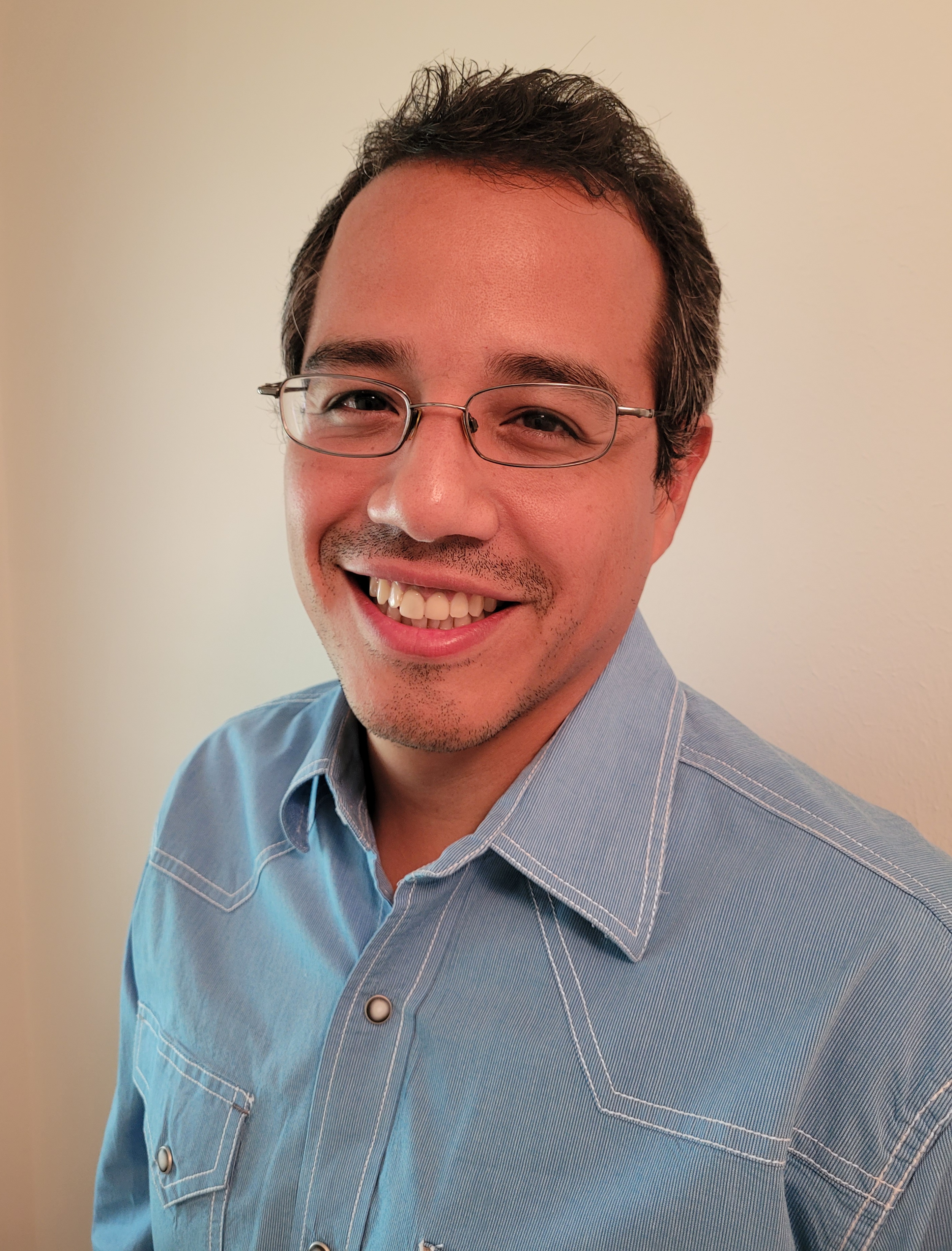
Edward Castillo is an Associate Professor of Biomedical Engineering at The University of Texas at Austin, where he also serves as Associate Chair for Graduate Education and holds the William J. Murray, Jr. Fellowship in Engineering. He grew up in San Antonio, Texas, and earned his B.S. in Mathematics from St. Mary's University before completing his Ph.D. in Computational and Applied Mathematics at Rice University in 2007.
His research applies numerical optimization and machine learning to medical imaging, with a focus on CT-derived functional imaging, which extracts measurements of lung ventilation and perfusion from already acquired standard-of-care CT scans. His methods have been used in a multi-institutional Phase II clinical trial that spared healthy lung tissue during radiotherapy for lung cancer, and they now support an FDA-cleared imaging product entering clinical use. His current NIH-funded work extends these methods to predicting disease progression in COPD and reducing treatment toxicity in cancer patients. He is the inventor on three issued patents and has authored nearly 100 peer-reviewed publications, and he co-created the DIR-Lab reference datasets that serve as a standard benchmark for validating image registration accuracy worldwide.
Edward is a charter member of the NIH Image Guided Interventions and Surgery study section. He served as Chair of the UT Austin Faculty Council from 2024 to 2025, where he represented 3,700 faculty members. He has mentored students from high school through the postdoctoral level, and his outreach includes a plenary talk at the Richard Tapia Celebration of Diversity in Computing, a keynote at the National Student Research Congress at Tecnológico de Monterrey in Mexico City, and invited sessions at SACNAS. He serves on the executive committee of the Center for Mexican American Studies at UT Austin and on the AAPM Hispanic and Latinx Medical Physics Subcommittee.
At UT Austin he teaches the department's introductory numerical methods course, which he has offered nearly every semester since 2022, along with graduate courses in machine learning methods and medical image processing. The numerical methods course is where most biomedical engineering undergraduates first encounter computation as a tool for reasoning about physiology, and he designed it around that transition.
Mentoring is where he sees the longest-lasting impact. He currently advises six doctoral students and two postdoctoral fellows, and his undergraduate mentees have gone on to Ph.D. programs at MIT and the University of Pennsylvania, an NSF Graduate Research Fellowship, and a UT Co-op Mitchell Grand Prize. He has supported a postdoctoral scholar and an undergraduate researcher through NIH diversity supplements, and as Associate Chair for Graduate Education he oversees the department's Ph.D. and M.A. programs, where he established the annual doctoral review process and a new core curriculum in mathematics and biology.
“Growing up in San Antonio, I knew that I was good at math. What I didn't know was that I could have a career as a scientist, because none of the scientists I had ever seen looked like me. In graduate school I failed a qualifying exam and nearly left. Thankfully, Richard Tapia told me exactly what I needed to hear: "You belong here. Work hard and you are going to succeed." Hispanic Heritage Month is my chance to say the same thing to the next generation: you can do math that makes an impact, and if you work hard you will find success.”


