Lathisms
Creative Template
for Webflow
for Webflow

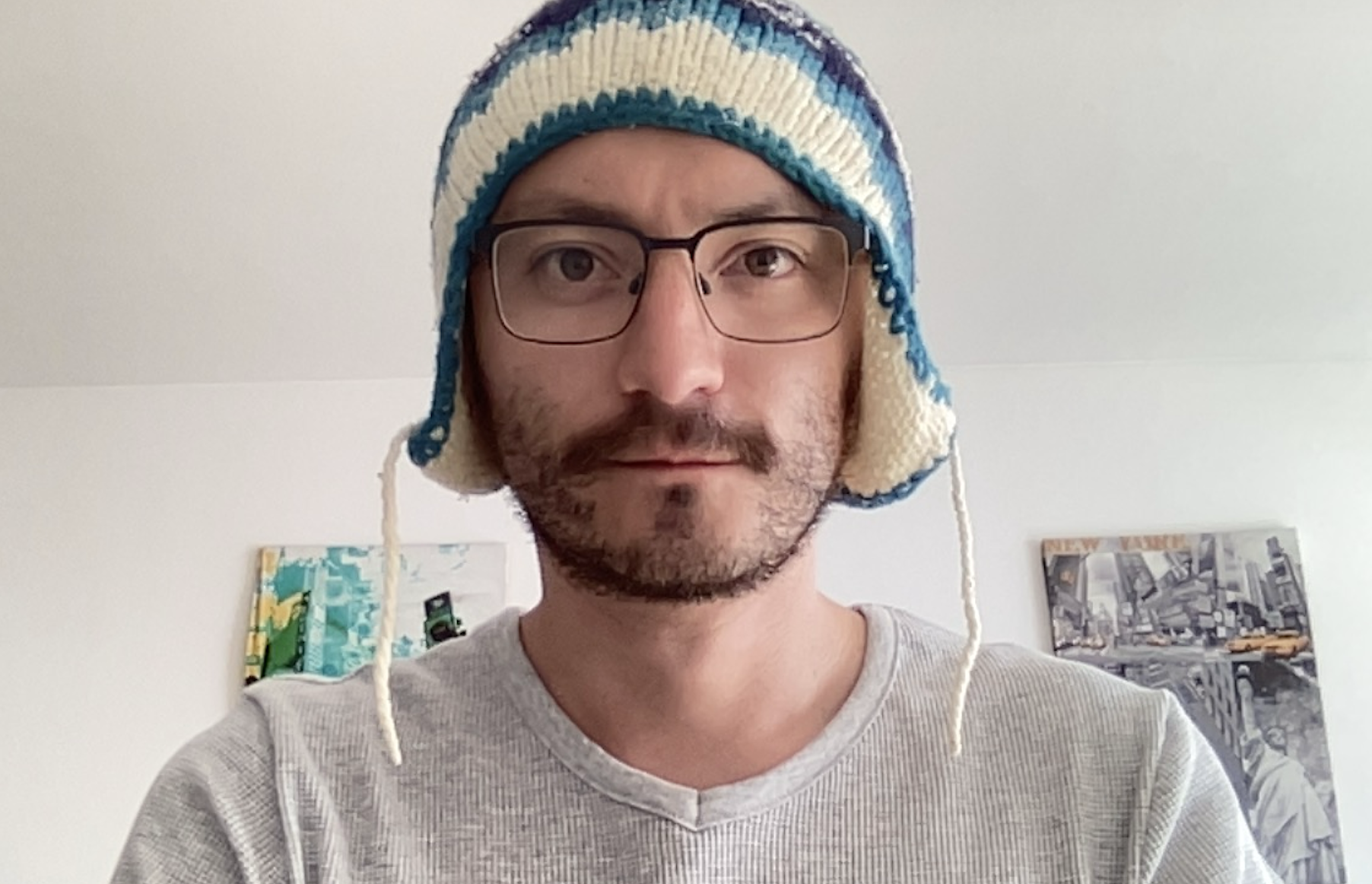
Diego Villamizar is from Bogotá, Colombia where he obtained his undergraduate degree in mathematics from Universidad Sergio Arboleda. He spent a year working as a lecturer before going to New Orleans to work with Victor H. Moll at Tulane University where he obtained his Ph.D. He was a postdoctoral researcher at Aalto University in Espoo, Finland under the guidance of Camilla Hollanti, and then went to work as a professor at Universidad Sergio Arboleda. Diego is now back in New Orleans where he works as an assistant professor at Xavier University of Louisiana.
Diego's research interest is in discrete mathematics, with a particular passion for enumerative combinatorics. He uses combinatorial, probabilistic, algebraic, and analytic arguments to analyze patterns in combinatorial structures such as set partitions, lattice paths, permutations, and polyominoes. In recent years, he has been interested in applying these arguments to questions from percolation theory, coding theory and social choice theory.
Apart from his research, Diego has served as an instructor across different universities and countries, where he has worked with students from a wide range of backgrounds, an experience that has allowed him to constantly learn from his students. Now working at an HBCU, he takes great pride in creating an inclusive environment for discovering math. One of the ways he has used to hook students on math has been by being involved as a coach of programming contest teams. By connecting algorithmic puzzles to mathematics, he has guided students into graduate programs in math and coding positions outside academia.
“Hispanic Heritage Month is a time to celebrate a culture, a language, a history, and a way of understanding the world and what unites us. It is also a time to express gratitude to all those who have contributed to this culture and inspired others to take pride in our roots. Personally, it makes me think of my mentors (gracias totales!), all the work they have done, and all the work we must keep doing to take math to more and more people.”


